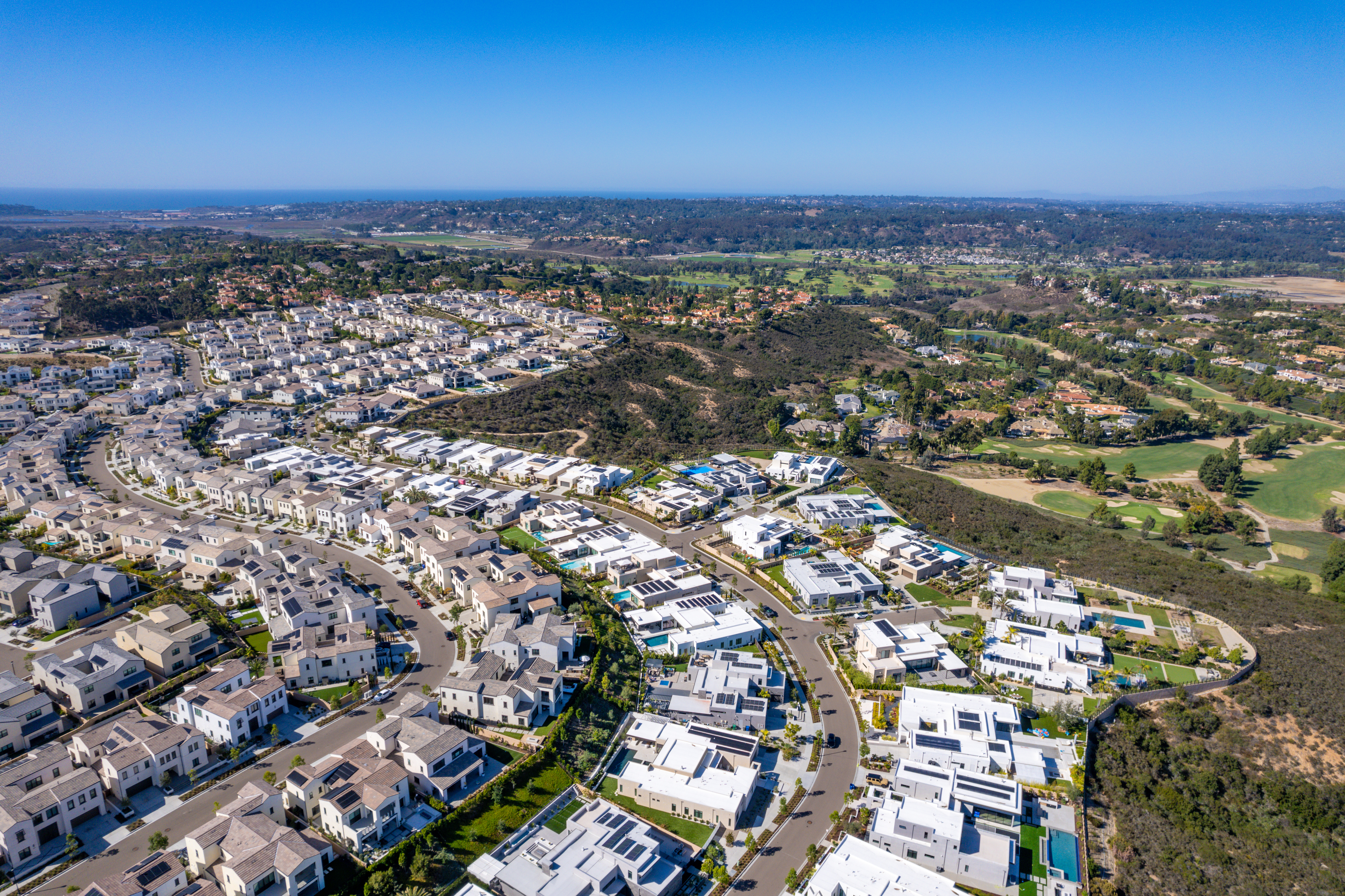
Mello-Roos is a special tax assessed on properties within a Community Facilities District (CFD) — a mechanism created in 1982 to fund infrastructure like roads, schools, and parks in newer California communities. It appears as a separate line item on your property tax bill and can add hundreds to thousands of dollars per year to your housing costs.
If you are shopping for a home in San Diego — especially in newer master-planned communities like Pacific Highlands Ranch, Otay Ranch, Chula Vista, or parts of North County — there is a very good chance you will come across Mello-Roos. It is one of the most misunderstood parts of the California homebuying process, and it can meaningfully affect your monthly housing budget in ways that a mortgage payment alone does not reveal.
This guide will walk you through exactly what Mello-Roos is, why it exists, what it means for your bottom line, and — most importantly — how to check for it before you make an offer.
What Is Mello-Roos?
Mello-Roos is a special tax assessment levied on properties within a Community Facilities District (CFD) — essentially a special taxing district formed by a local government agency to fund specific infrastructure or public services in a defined area.
The name comes from the two California legislators who authored the enabling legislation: Senator Henry Mello and Assemblyman Mike Roos. Their bill — the California Community Facilities Act of 1982 — created the legal framework that allows cities, counties, and school districts to establish CFDs and issue bonds to pay for new infrastructure upfront, with property owners in the district repaying those bonds over time through a special tax.
Mello-Roos was designed specifically as a workaround to Proposition 13, which limits standard property taxes to 1% of assessed value and capped annual increases at 2%. Prop 13 left local governments with limited revenue for infrastructure needed in fast-growing areas. CFDs filled that gap — allowing agencies to build schools, roads, parks, and utilities in new developments and recover those costs from the homeowners who benefit from them.
What Does Mello-Roos Fund?
The funds raised through Mello-Roos bonds and special taxes can be used for a wide range of infrastructure and public services, including:
- Roads, streets, and traffic improvements
- Public schools and school facilities
- Parks and recreational facilities
- Water and sewer infrastructure
- Police and fire services
- Libraries and community facilities
- Flood control and storm drains
In many newer San Diego communities, the schools, parks, and roads that make the neighborhood so appealing were funded in part by Mello-Roos bonds that current homeowners are still paying off.
How Mello-Roos Works: The Key Details
| Feature | What It Means for You |
|---|---|
| Added to Your Tax Bill | Mello-Roos appears as a separate line item on your county property tax bill, under "special taxes" or "district charges" — in addition to your standard 1% property tax. |
| Not Based on Property Value | Unlike standard property tax, Mello-Roos is calculated using a special formula set by the district — often based on lot size, square footage, or benefit zones — not your home's assessed value. |
| Duration | Mello-Roos typically lasts 20 to 40 years, depending on the bond terms. Some districts have a defined end date; others do not. If the bonds are paid off early, the tax may drop off sooner. |
| Accelerated Foreclosure Risk | If Mello-Roos goes unpaid, the CFD can initiate an accelerated foreclosure — faster than general property tax foreclosure — to collect the debt. This is a serious consequence most buyers are not aware of. |
Why San Diego Buyers Need to Pay Attention
It Adds Real Dollars to Your Monthly Cost
In San Diego County, Mello-Roos assessments commonly range from a few hundred dollars per year in older or lower-bond districts to well over $3,000 to $5,000 per year in newer communities with larger bond obligations. Spread across 12 months, that is an additional $250 to $400+ per month on top of your mortgage, standard property tax, HOA dues, and homeowners insurance. Your monthly payment can look very different once all these costs are added in.
The Disclosure Is Required, But the Details Often Are Not
California law requires sellers to disclose whether a property is within a CFD. However, the exact annual amount, the formula used to calculate it, the remaining bond balance, and the expiration date are often buried in the fine print — or not discussed at all in the initial marketing materials. As a buyer, you need to ask specifically and verify independently.
Two Homes Can Have Very Different Tax Burdens
Two houses on the same street — or even in the same neighborhood — could carry very different Mello-Roos obligations depending on which CFD or sub-district each parcel falls into. Some homeowners even pay into multiple CFDs simultaneously. You cannot assume that because one home in an area has low Mello-Roos, the home you are buying will as well.
It May or May Not Have an End Date
Some CFDs are structured with a specific payoff timeline. Once the underlying bonds are retired, the Mello-Roos obligation ends. Others are ongoing and do not have a defined end date. Knowing which type applies to your property matters a great deal for long-term financial planning.
How to Check for Mello-Roos on a Property
Use the San Diego County Special Assessments Tool
The most direct way to check is through the official San Diego County tool. You can enter a parcel number to see Mello-Roos and CFD details for any property in the county. Visit: specialassessments.sandiegocounty.gov. The Mello-Roos assessment will appear as a separate item under "special taxes" or "district charges."
Review the Preliminary Title Report and Seller Disclosures
When you are in escrow, the preliminary title report will flag any CFD or special district encumbrances. The seller's disclosure documents — particularly the Natural Hazard Disclosure (NHD) report and any supplemental CFD disclosures — should also identify Mello-Roos obligations. Read these carefully and ask your agent to walk through them with you.
Contact the CFD Administrator Directly
Every Community Facilities District has an administrator — often a local agency or a third-party management company — whose contact information is listed on the tax bill or in the district's annual report. They can provide the most detailed and up-to-date information about the bond balance, annual assessment amount, and projected payoff timeline.
Buyer Checklist: Questions to Ask Before You Buy
- Is this property located within a Mello-Roos CFD?
- What is the current annual Mello-Roos amount — or the formula used to calculate it?
- Is there a defined expiration date for the tax? When is it?
- What is the remaining bond balance, and how many years are left?
- Are there multiple CFDs or special assessments on this parcel?
- What does the Mello-Roos fund — schools, parks, infrastructure?
- Has the amount increased in recent years, and is it expected to?
Mello-Roos and the True Cost of Homeownership
When you are calculating what you can afford in San Diego, your mortgage payment is just the starting point. A complete monthly cost picture for many San Diego homes includes:
- Principal & Interest — your mortgage payment
- Standard Property Tax — approximately 1% of purchase price annually
- Mello-Roos — varies by district, often $200–$500/month
- HOA Dues — common in master-planned communities
- Homeowners Insurance — typically $100–$250/month
- Supplemental Property Tax — a one-time bill in your first year
Understanding all of these components before you make an offer is one of the most important things you can do as a buyer. A home that appears affordable based on its list price can carry a total monthly cost that is significantly higher once Mello-Roos, HOA, and insurance are factored in.
Use our Mortgage Calculator to estimate your full monthly payment — including property taxes, HOA dues, Mello-Roos, and homeowners insurance — before you fall in love with a home.
Frequently Asked Questions About Mello-Roos
Mello-Roos taxes that fund general government services (such as police, fire, or schools) are generally not deductible on your federal income taxes. However, if the Mello-Roos funds improvements specifically to your property or street, a portion may be deductible. Tax laws change, so consult a qualified tax advisor for guidance specific to your situation.
No. Mello-Roos is most common in newer communities developed after 1982, particularly master-planned developments where significant infrastructure investment was required. Established neighborhoods — especially those built in the 1970s or earlier — typically do not have Mello-Roos. Many older parts of San Diego, La Jolla, Del Mar, and Solana Beach have no Mello-Roos at all.
In many cases, yes. Some CFDs allow property owners to prepay their share of the outstanding bond obligation, eliminating the annual Mello-Roos tax going forward. The process and amount vary by district. Contact the CFD administrator to find out if a prepayment option is available and what the current payoff amount would be.
Yes. Mello-Roos is a lien on the property, not the person. When you purchase a home in a CFD, the Mello-Roos obligation transfers to you as the new owner. This is why it is essential to verify the annual amount and remaining term before closing.
The most reliable sources are: (1) the San Diego County Special Assessments lookup tool at specialassessments.sandiegocounty.gov, (2) the property's tax bill, and (3) the CFD administrator. Your real estate agent and the escrow company can also help you locate and interpret these documents during the transaction.